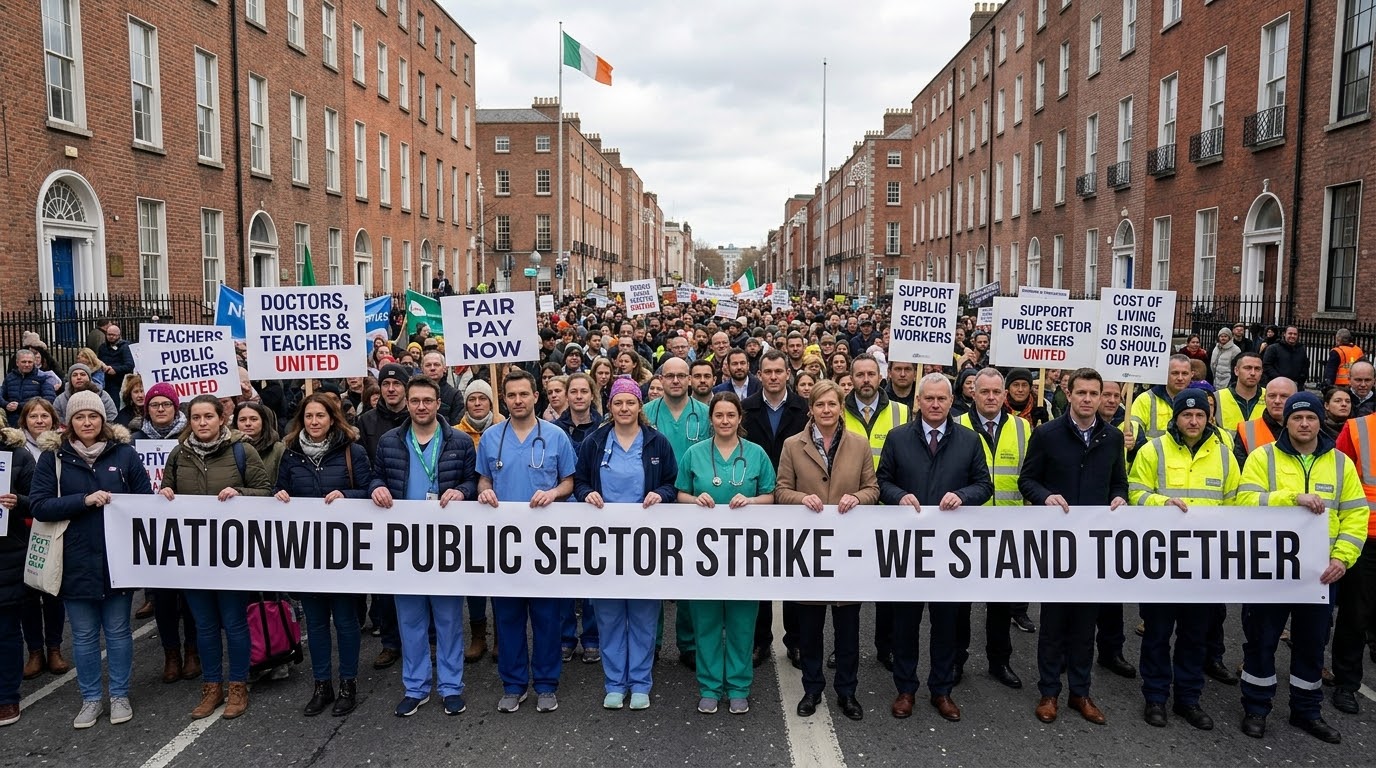
Irish Public Sector Braces for Massive Strike: Schools and Non-Urgent Healthcare to be Disrupted
A major national strike is set to take place in Ireland on Wednesday, October 14, as over 300,000 public sector workers—including doctors, nurses, teachers, and civil servants—prepare to walk out. The massive strike follows a deepening dispute between trade unions and the government over a new public sector pay agreement.
The nationwide industrial action is expected to heavily impact schools, hospitals, and various public services across the country.
The Dispute
The current strike stems from a deadlock in negotiations for a new public sector pay deal, following the expiration of the previous agreement. Trade unions argue that with the rising cost of living and high inflation, the government’s current budget proposals fail to offer sufficient pay increases to protect workers' purchasing power. They have accused the government of failing to engage in meaningful and serious negotiations to address these pressing financial challenges.
Impact on Education
Parents and students are bracing for widespread disruptions, as members of major teaching unions—such as the INTO, ASTI, and TUI—are participating in the strike. Most schools across Ireland are expected to close or operate at heavily reduced capacity, affecting classes, school-run services, and causing childcare challenges for families.
Healthcare Disruption
The Health Service Executive (HSE) has warned of extensive disruptions, with routine appointments, outpatient clinics, and planned (non-urgent) surgeries being cancelled nationwide. Hospitals are directly contacting affected patients to reschedule.
However, critical and life-saving services will continue to operate. Emergency departments, urgent ambulance services, crucial cancer treatments, and dialysis will remain functional. Health authorities have urged the public not to delay seeking urgent medical care. GP services and pharmacies are expected to operate as normal.
As both sides remain at a standstill, Wednesday's strike is expected to cause significant daily challenges for students, patients, and families reliant on public services nationwide.